
Topsoil That Stays in Place After Clearing
Erosion Control in Seymour for cleared and graded sites vulnerable to seasonal runoff and slope failure
Heavy seasonal runoff in Seymour foothills washes away topsoil on bare lots, creating gullies and exposing foundations within a single rain event. Improper erosion control after clearing or grading leads to topsoil loss and slope failure that delays construction and requires expensive rework. Knoxville Land Management controls erosion on cleared and graded sites through mulch application, slope stabilization, and site drainage management across residential and commercial properties in East Tennessee.
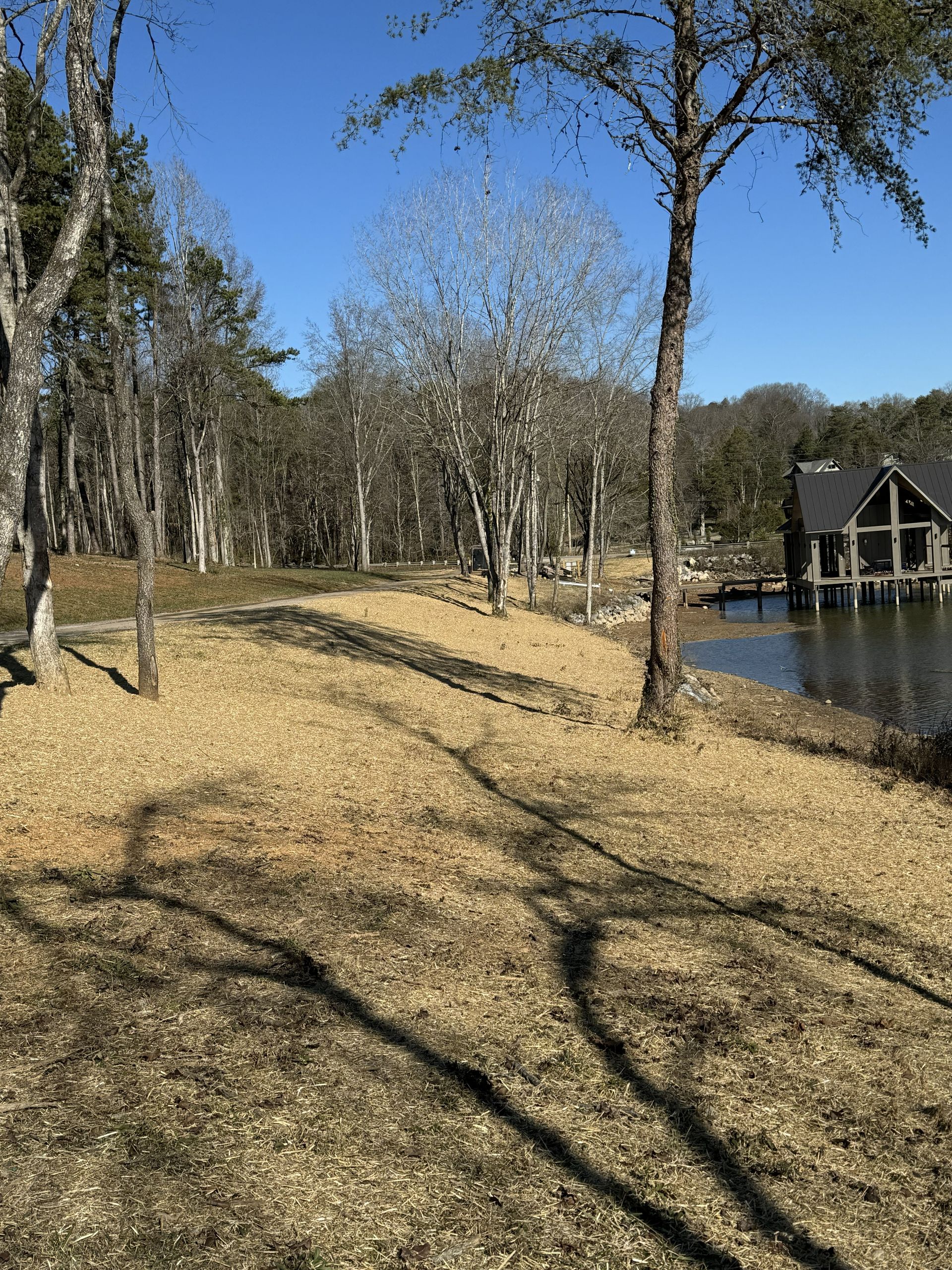
Erosion control involves applying forestry mulch produced from on-site tree and brush processing to stabilize bare soil. The mulch layer absorbs rainfall impact, slows water movement across slopes, and holds soil in place while vegetation establishes. Grading and drainage work are coordinated with mulch application to direct water and prevent erosion gullies from forming in the first place.
Schedule a property evaluation to identify erosion risks based on your site's slope and soil exposure.
Knoxville Land Management uses forestry mulching equipment to produce mulch on-site from cleared trees and brush, then applies it to bare soil areas at depths that match slope and runoff conditions. Steeper slopes and areas with concentrated water flow receive thicker mulch layers, while flatter areas require less coverage. The mulch integrates with grading work to create a complete system that manages both water direction and soil protection.
Once erosion control is in place, rain soaks into the mulch layer instead of running across bare soil, slopes no longer develop washout channels, and topsoil remains in place through storm cycles. The mulch decomposes over time, adding organic material to the soil and supporting vegetation growth that provides permanent erosion protection. Sites stay stable between clearing and construction without requiring repeated mulch applications.
Erosion control applications are sized based on slope angle, soil type, and expected rainfall intensity. Sites with ongoing construction activity may need additional mulch in high-traffic areas. Erosion control meets environmental compliance requirements for cleared land and prevents sediment runoff into adjacent properties or waterways.
Answers to Frequent Service Questions
Property owners in Seymour often ask about mulch sources, application methods, and how erosion control fits into site work timelines.
What type of mulch is used for erosion control?
Forestry mulch from on-site clearing provides the material. This mulch includes ground tree trunks, branches, and brush processed into uniform pieces that interlock on slopes and resist washing away.
How soon after clearing should erosion control be applied?
Mulch should be applied immediately after clearing or grading exposes bare soil. Waiting even a few days increases the risk of erosion during unexpected rain, especially on slopes steeper than ten percent.
Why does Seymour experience more erosion than flatter areas?
Foothills terrain concentrates runoff on slopes, and the region's clay soils lack the structure to resist water flow. Without erosion control, a single heavy rain can remove inches of topsoil from cleared lots.
How thick does the mulch layer need to be?
Mulch depth depends on slope angle and runoff intensity. Most sites require three to four inches of mulch, while steeper slopes or areas with concentrated water flow may need six inches or more to prevent erosion.
What happens to the mulch over time?
The mulch decomposes gradually, adding organic material to the soil and supporting vegetation growth. As plants establish, their roots take over erosion control functions, providing permanent slope stabilization.
Knoxville Land Management integrates erosion control into every land clearing and grading project to protect soil and meet environmental compliance. Arrange a consultation to review erosion risks and mulch application requirements for your site.