
Clear Invasive Growth and Restore Property Access
Brush removal in Seymour for dense undergrowth, saplings, and invasive vegetation on residential and commercial lots
Fallow areas on Seymour properties accumulate invasive brush, saplings, and undergrowth that create wildfire risk and limit property usability. Knoxville Land Management removes dense vegetation from residential and commercial lots, clearing land for construction, maintenance, or fire prevention. The work targets saplings, brambles, vines, and woody undergrowth that spread aggressively in East Tennessee's climate and prevent mowing, grading, or safe access across the property.
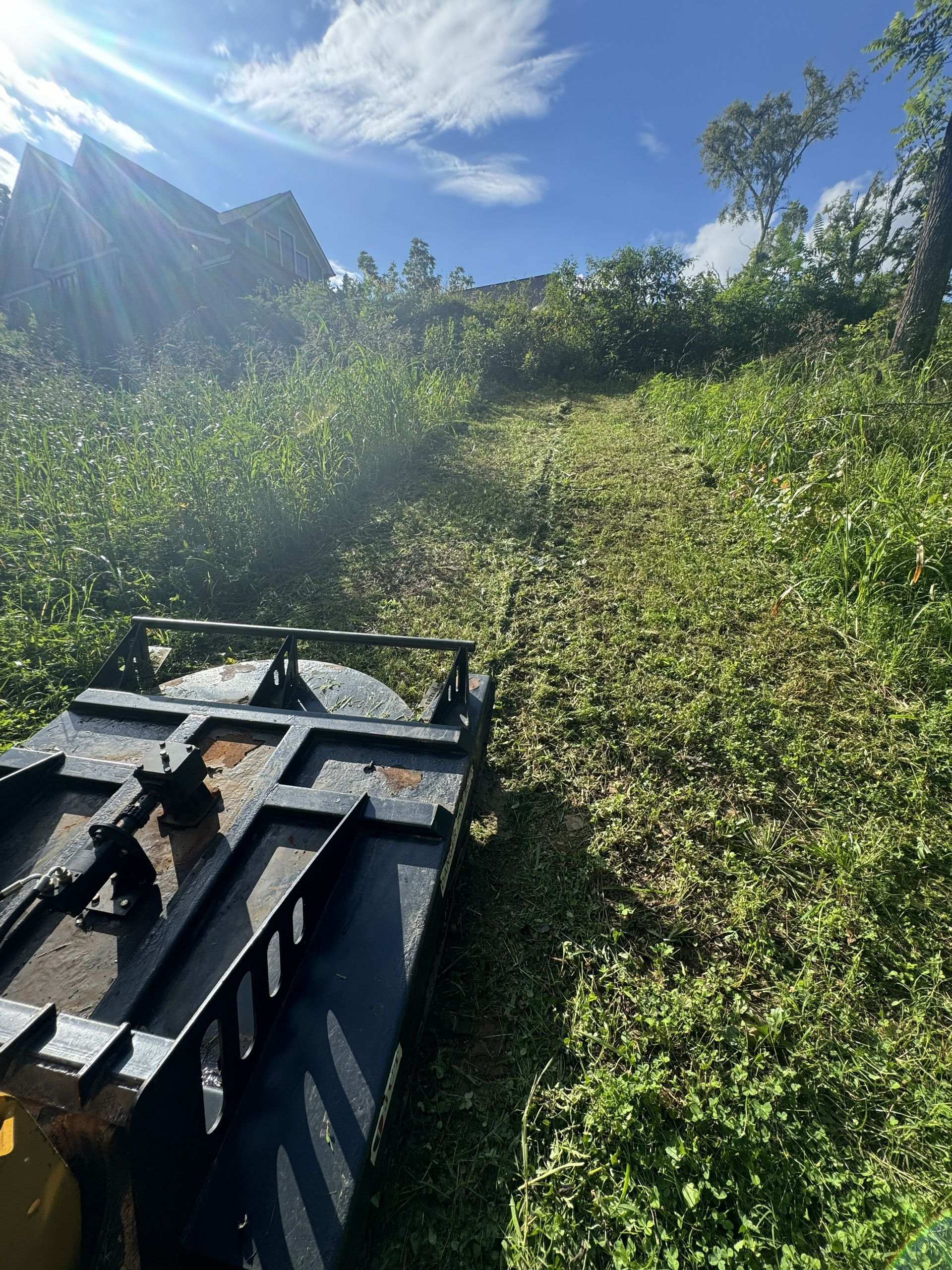
Brush removal uses forestry mulching and bush hogging to process material on-site, grinding it into mulch that stabilizes soil or can be removed depending on the project. Mulching breaks down saplings and thick brush at ground level without leaving stumps or root balls that interfere with future grading. Bush hogging handles lighter vegetation and prepares areas for follow-up mulching if needed.
Request a detailed estimate based on your property's current vegetation density and intended use.
The process involves driving forestry mulching equipment across overgrown areas to grind saplings, brush, and vines into chips. The mulcher's rotating drum with carbide teeth processes woody material up to several inches in diameter, leaving a uniform layer of mulch on the ground. For lighter vegetation, bush hogging cuts growth close to the surface, which speeds up the work on parcels with mixed grass and brush.
After removal, you see cleared ground or a layer of wood chips instead of impenetrable thickets. The property becomes accessible to mowing equipment, vehicles, and construction machinery. Fire risk drops significantly because there's no longer a continuous fuel load of dry brush connecting the ground to tree canopies, which is a common ignition pathway during droughts in Tennessee.
The mulch layer left behind prevents immediate regrowth by blocking sunlight and creating a barrier for new seeds. If you plan to grade or build, the mulch either incorporates into the soil during excavation or gets hauled off depending on site requirements and local grading codes.
Common Questions About This Service
Brush removal raises questions about equipment capability, regrowth prevention, and what the site looks like after the work finishes.
What types of vegetation does brush removal handle?
The service clears saplings, brambles, vines, invasive shrubs, and woody undergrowth typical of East Tennessee properties. Forestry mulching processes material up to several inches thick, while bush hogging handles grasses and lighter brush.
How does mulching prevent regrowth after brush is cleared?
The mulch layer blocks sunlight from reaching the soil surface, which prevents most seeds from germinating and slows the resprouting of cut vegetation. This gives you a maintenance window before regrowth begins, typically several months depending on rainfall and growing conditions in Seymour.
What's the difference between mulching and bush hogging for brush?
Forestry mulching grinds woody material into chips and processes it in place, which works for thick saplings and dense undergrowth. Bush hogging cuts lighter vegetation close to the ground, leaving cut material on-site, and is faster for parcels with mixed grass and brush rather than heavy woody growth.
When should brush removal happen before lot preparation?
Brush removal should finish before grading, excavation, or any construction activity begins. Clearing the vegetation first allows surveyors and equipment operators to see the ground surface and access the property without obstruction.
Can the mulch be removed instead of left on-site?
Yes, mulch can be hauled off if your project requires bare soil for grading or if local codes prohibit organic material in certain construction zones. Removal adds haul time and disposal cost compared to leaving mulch in place.
Knoxville Land Management operates forestry mulching and bush hogging equipment for full brush and undergrowth clearance, leaving sites ready for construction or ongoing maintenance. Contact the team at (865) 256-3959 to review your property and determine the best approach for clearing dense vegetation.