
Process Material On-Site and Haul What Remains
Debris removal in Seymour for trees, brush, stumps, and site debris from residential and commercial clearing projects
Seymour properties generate significant debris from tree removal and land clearing—enough to fill multiple truckloads if all material is hauled to landfills. On-site processing reduces haul frequency and landfill cost by converting wood and brush into usable mulch. Knoxville Land Management removes trees, brush, stumps, and site debris from residential and commercial properties, processing material with forestry mulching equipment when possible and hauling non-processable debris via equipped trucks. Once the job is finished, you see a clean site ready for the next project phase, with no piles of limbs, root balls, or scattered wood left behind.
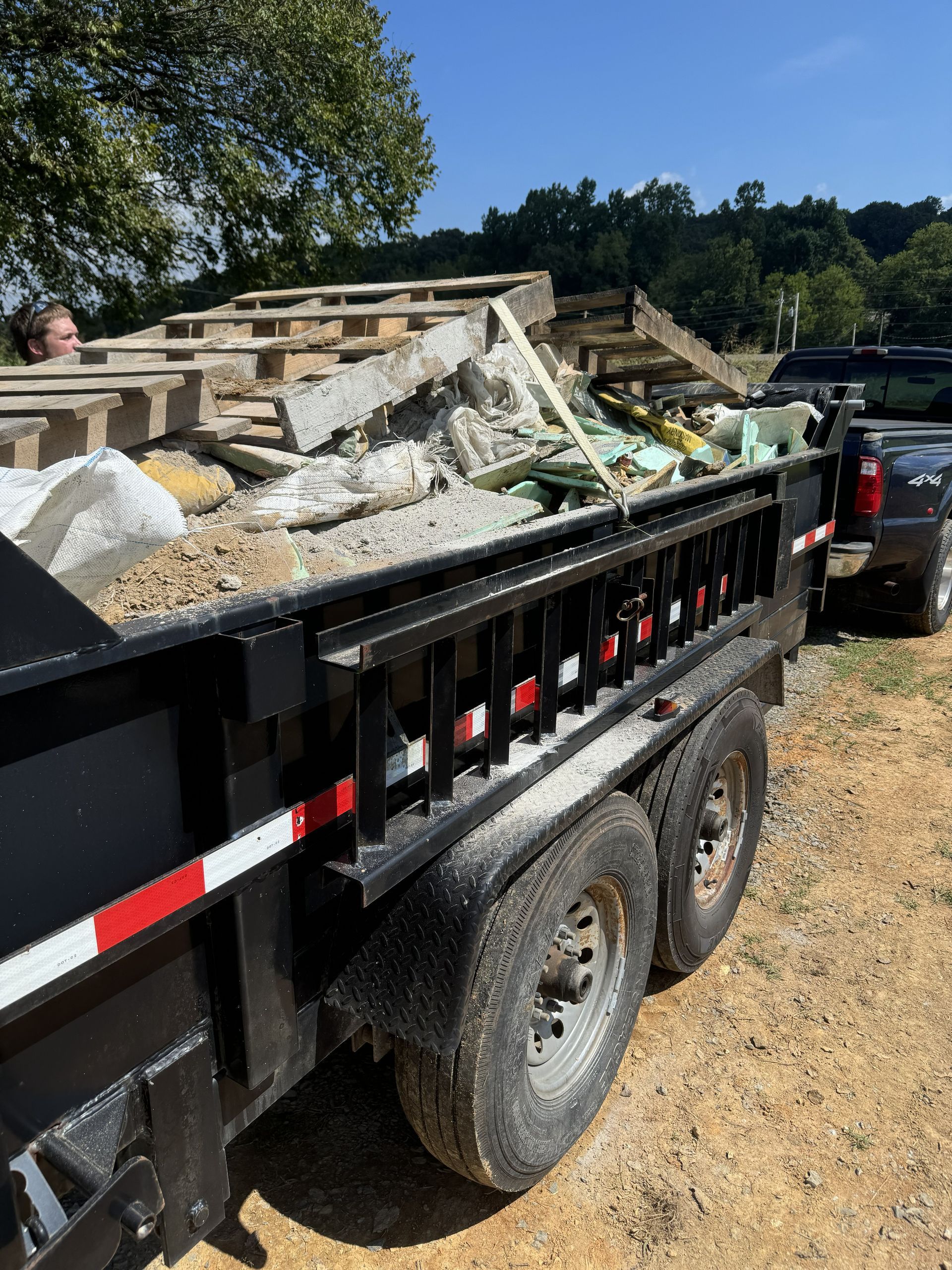
The process uses forestry mulching to grind wood and brush into chips on-site, which eliminates most of the volume that would otherwise require hauling. Material that can't be mulched—such as large stumps, concrete, metal, or contaminated soil—is loaded onto trucks and hauled to appropriate disposal or recycling facilities.
Request a detailed estimate to determine processing and haul requirements for your property's debris volume.
Debris removal involves sorting material into what can be processed on-site and what requires hauling. Forestry mulching equipment processes branches, logs, and brush into chips, which are either spread evenly across the property for erosion control or staged in piles for later use. Stumps are ground flush with the surface, and the resulting wood chips are added to the mulch layer or hauled off depending on project needs.
After removal, the property no longer has piles of limbs, scattered logs, or exposed root systems. The ground is clear enough for grading equipment, surveyors, or construction crews to begin work. If mulch remains on-site, it forms a uniform layer that holds soil in place and prevents erosion until grading or permanent ground cover is installed.
Knoxville Land Management recently invested in equipment to support full-scale clearing and debris removal operations, which allows for efficient processing on properties ranging from single-lot residential sites to multi-acre commercial parcels. The equipment reduces the number of haul trips required and shortens the timeline between clearing and next-phase construction work.
Questions Before Starting Your Project
Debris removal involves decisions about what gets processed, what gets hauled, and how the site should look after the work is done.
What types of debris can be processed on-site?
Wood, brush, limbs, and stumps are processed into mulch using forestry mulching and grinding equipment. Non-organic material such as concrete, metal, or contaminated soil requires hauling to appropriate disposal facilities.
How does on-site processing reduce cost compared to hauling everything?
Mulching converts bulky wood and brush into chips that occupy a fraction of the original volume, which eliminates the need for multiple dump truck loads. Haul cost is based on trips and landfill fees, so processing most material on-site cuts both significantly.
What happens to mulch after debris is processed?
Mulch is either spread evenly across the property for erosion control or staged in piles for future use in landscaping or grading. If the project requires bare soil, mulch can be hauled off along with non-processable debris.
How long does debris removal take on a typical Seymour property?
Timeline depends on debris volume, material type, and haul distance to disposal facilities. Most residential lots clear and process debris within a few days once equipment is on-site and processing begins.
Can debris removal happen at the same time as clearing or grading?
Yes, the work typically happens concurrently—trees and brush are felled, processed into mulch, and any remaining non-processable material is hauled as the clearing progresses. This keeps the project moving without separate mobilization for debris-only work.
Knoxville Land Management handles debris processing and removal efficiently, using forestry mulching and equipped trucks to leave sites clean and ready for construction or grading. Call (865) 256-3959 to schedule a site visit and discuss processing and haul options for your project's debris.