Clearing Dense Growth Before It Becomes a Problem
Bush hogging in Seymour for properties with overgrown fields, saplings, and thick brush that block grading or development
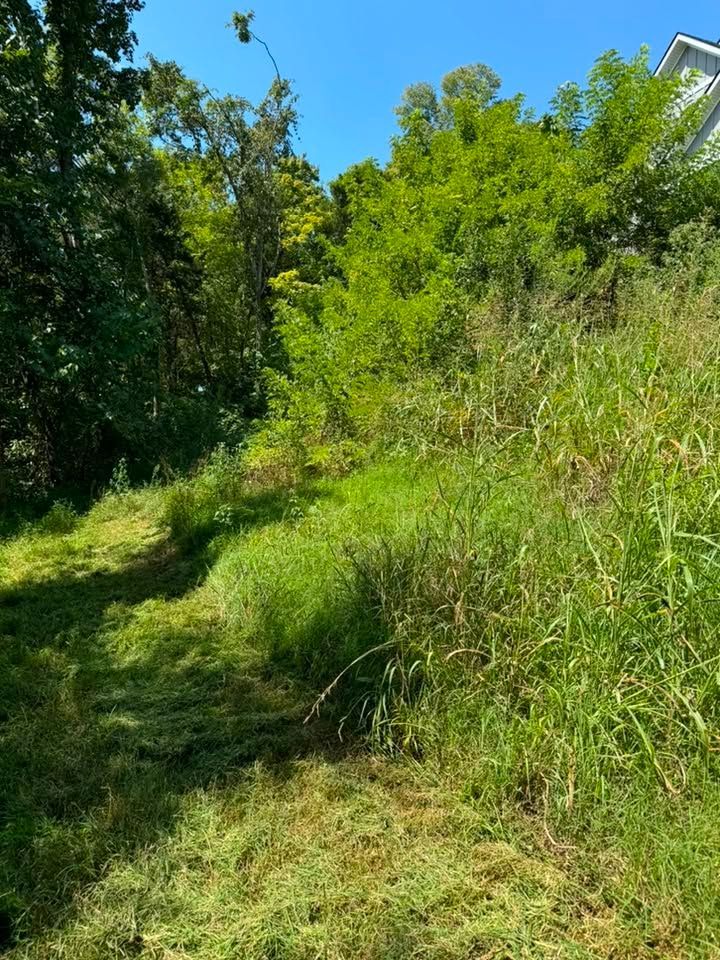
Knoxville Land Management handles bush hogging across Seymour and East Tennessee, cutting through overgrown vegetation that prevents land use or site preparation. This service targets properties where tall weeds, dense brush, and small saplings have taken over fields, building pads, or fence lines. The rotary cutter equipment shreds vegetation down to a manageable height, preparing uneven ground for grading, erosion control, or development without leaving piles of debris that require separate hauling.
Bush hogging uses a heavy rotary cutter mounted to a tractor, designed to handle thick vegetation and small woody growth that standard mowers cannot touch. The operator adjusts cutting height and ground speed based on vegetation density, soil conditions, and whether the property will be graded immediately or left to settle between seasonal growth cycles. In East Tennessee, spring and summer moisture accelerates regrowth, so timing and cutting strategy affect how quickly vegetation returns and whether additional passes will be necessary before final site work begins.
Schedule a property walkthrough to review vegetation type, terrain grade, and site preparation goals.
The rotary cutter shreds vegetation rather than slicing it cleanly, which allows the machine to power through saplings, brambles, and matted undergrowth without clogging or binding. Operators control blade speed and approach angle to manage how material is distributed across the property, preventing clumps that obstruct grading equipment or trap moisture that encourages rapid regrowth. For properties preparing for construction or driveway installation, bush hogging clears sight lines, exposes terrain irregularities, and removes organic matter that would interfere with compaction or drainage work.
After bush hogging, the ground surface is visible and accessible to grading equipment, soil testing tools, and surveyors. Stumps, rocks, and grade changes that were hidden beneath vegetation become apparent, allowing accurate estimates for excavation, fill material, or drainage correction. The shredded vegetation decomposes in place rather than requiring removal, which reduces hauling costs but means the area may need a follow-up pass if regrowth occurs before final grading begins.
Bush hogging does not remove root systems or stumps, so properties with heavy sapling growth may need additional clearing or forestry mulching to prevent regrowth. The service prepares ground for grading but does not replace excavation, drainage correction, or gravel installation. On sloped or wet terrain, operators may adjust cutting patterns to avoid rutting or compaction that complicates later earthwork.
What Property Owners Usually Ask
Property owners preparing overgrown land in Seymour often want to understand how bush hogging fits into site preparation and what happens after the vegetation is cut.
What size vegetation can bush hogging handle?
Rotary cutters shred brush, tall weeds, and saplings up to several inches in diameter, but mature trees or heavy stumps require separate removal equipment. The cutter handles dense undergrowth and field vegetation that standard mowing equipment cannot process.
How does seasonal growth in East Tennessee affect clearing?
Spring and summer moisture accelerates regrowth, so properties cleared in late spring may need a follow-up pass before grading if final site work is delayed. Cutting during drier months slows regrowth and reduces the chance of needing additional passes before construction begins.
What happens to the cut vegetation after bush hogging?
The shredded material is left on the ground to decompose rather than hauled away, which reduces cost but means organic matter remains on-site. For properties requiring immediate grading, this is rarely an issue, but heavy vegetation may need time to settle before final grading passes.
Does bush hogging prepare land for gravel driveways or building pads?
Bush hogging clears vegetation and exposes the ground surface, but it does not level terrain, remove roots, or correct drainage. The service prepares land for grading and excavation equipment to access the site and complete earthwork needed for stable foundations or driveway bases.
Can bush hogging handle uneven or sloped terrain?
Operators adjust cutting height and ground speed to manage slopes and avoid rutting, but steep grades or saturated soil may require additional passes or equipment adjustments. Uneven terrain is cleared, but final grading and drainage work are separate steps that follow vegetation removal.
Knoxville Land Management bundles bush hogging with grading, land clearing, and site prep to move properties from overgrown fields to construction-ready ground. Call (865) 256-3959 to discuss vegetation conditions, site preparation timelines, and whether additional clearing or grading equipment will be needed after the initial pass.